Showing posts with label travel. Show all posts

Monday, November 14, 2022

Tierra Bendita (The Land of the Blest)


This Spanish translation of Gearld Griffin's 19th century Irish ballad, "The Land of the Blest," was completed by Spanish and Literature professor, Manuelita Palavecino, Marcela Acevedo and myself here in Castelli, Chaco in northern Argentina. I hope to record a live version of "Tierra Bendita" in coming months, heres a link to one in English from a few years ago. I was practicing the song recently along with folk musician Facundo Flores while on my tour of Buenos Aires and environs, though it hasn't had a live debut, yet! Facundo plays the tiple on it, a beautiful resonant Colombian instrument a bit like a twelve string guitar. We wound the song up from its lyrical and wistful sean-nós roots, giving it a definitive rhythm.


En los mares que esculpen tus tierras de sal,
una isla nació, misteriosa, cuentan.
Un oasis de sol, una isla de paz,
tierra bendita, Hy Brasil, sin mal.

Año tras año en aquel horizonte azul,
como espectro brilló lejano en su luz.
Un cielo dorado la cubría bien,
lejos, muy lejos, igual que el Edén.

Un soñador oyó el relato y partió.
Hacia el Oriente, su vela soltó.
Desde Ara, la santa, a Hy Brasil viró.
Aunque Ara era santa, el oeste eligió.

Lo llamaban voces, mas no las oyó.
El rugido del viento lo amenazó.
Su hogar, su gente y certezas dejó.
Un nuevo horizonte, allá lejos buscó.

Mañana de sombras se asomó en el mar.
Mas la distancia lo invitó a soñar.
Al mediodía, el gris con oleajes,
pálida, distante, en aguas, salvaje.

El crepúsculo cruel al viajero abrazó.
Atrás esta Ara con desazón miró.
Lejanía, horizonte, cielo y mar.
La tierra bendita, imposible alcanzar.

Ecos amigos, velas de hogar y sal,
en Ara está la vida y la libertad.
Iluso, por una quimera incierta,
trocaste tu vida de trabajo y paz.

Razón y advertencias silenciadas son.
El regreso a Ara, jamás vislumbró.
Tempestad, alba, un hechizo y un adiós,
y murió en los mares, lejos, muy lejos.


Saturday, August 24, 2019

Songs from Cerro Gordo

The Battle of Cerro Gordo, 1847

In 2009 while filming "Saol John Riley" we visited Carlota Jacomé in her village, where, in April 1847, "the battle of Cerro Gordo" took place. Carlota is a local poet and singer, she sang her song about the San Patricios for us and I sang the Irish language version of my own song "Pa' Los Del San Patricio."


Carlota sings her song in Spanish, here is a transcription of the video in English, with the original Spanish afterwards.

I Carlota Jacomé, will sing this song of my own inspiration, words and music, concerning the Irish of the San Patricio Battalion.

This song that I have begun, I sing with emotion,
it concerns the terrible tragedy of the San Patricio's Battalion.
They were valiant men of pure heart,
to defend their rights and their people they joined the battalion,

They took away their means of living in Ireland,
Because of that they had to leave,
They came as immigrants among the Americans
they soon came to the Federal District of Mexico
along with a cause they had come to hate,

They had many battles because they were men of morals,
one of those was in the city of Monterrey,
they excelled in all the battles they were part of,
they had another battle in the city of Saltillo,

Of the few that I know, that I have in my list,
they fought again in the battle of Buena Vista.
when I start to think I bring it to mind and remember-
they had another battle with the men of Santa Ana
in the village of Cerro Gordo.

A date that will never be forgotten, I will always keep it in my mind-
the tenth of September in the 19th century in the year of 47.
They fought in Churubusco also at Chapultepec
with some Mexicans also at the square of San Angél.

Without cowardice, although they lost their lives,
they fought with their skill, valor and bravery.
In San Jacinto square there they were sacrificed,
these Americans without conscience and without feeling they hung them,

The pain goes right to my heart upon my soul,
what bad luck these 50 immigrants had from the land of Ireland.
We will always remember them and keep them in our history,
we will never forget, that God my keep them with him in his glory.

"Since I am not educated I know nothing of geography,
to my creator I recommend and I tell him with a guarantee,
Carlota Jacomé was the author of this ditty,
which is both a poem and poetry."

Yo Carlota Jacomé Marin, voy a cantarles este cantico en poema de mi propia inspiración, letra y música de los irlandeses del batallón san patricio


Les canto con sentimiento este canto que yo inicio,
de esta terrible tragedia del batallón San Patricio,
eran hombres muy valientes pero de buen corazón,
por defender sus derechos y por defender sus gentes
Se unieron al batallón.

Les quitaron sus recursos que tenían para vivir
por eso de allá de Irlanda se tuvieron que salir.
Se fueron como inmigrantes con los estadounidenses,
después se fueron de allí pa’ Distrito Federal

y también por esa causa los empezaron a odiar
Tuvieron varias batallas por que eran hombres de ley,
tuvieron una batalla en ciudad de Monterrey.
Las batallas que tuvieron en todas se dieron brillo,

Tuvieron otra batalla en la ciudad de Saltillo.
De las pocas que yo sé algunas tengo en mi lista,
tuvieron otra batalla en el pueblo Buena Vista,
cuando me pongo a pensar yo lo conservo y lo otorgo.

Tuvieron otra batalla con la gente de Santa Ana,
En el pueblo Cerro Gordo
Fecha tan inolvidable siempre la traigo en mi mente
en ese diez de septiembre del año 1800 del año 47.

lucharon en Churubusco también en Chapultepec,
con algunos mexicanos también en Plaza San Ángel.
Sin sentir la cobardía pero aunque perdieron sus vidas,
lucharon con su talento con valor y valentía.

En La Plaza San Jacinto allí los sacrificaron,
esos estadounidenses sin consciencia y sin dolor
allí también los horcaron.
Me duele hasta el corazón también me duele hasta el alma,
la suerte que les toco estos cincuenta inmigrantes,
de allá de tierra de Irlanda.

Siempre los recordaremos quedaron en nuestra historia
nunca los olvidaremos que Dios los tenga en su gloría.

Como nunca me ilustré no entiendo de geografía,
Al creador me encomendé le digo con garantía,
Carlota Jacomé fue la autora de este cantico,
que fue poema y fue poesía.

Wednesday, July 24, 2019

The Russian Bear 's Dubh Linn Duairc Daor


I was in St. Petersburg, Russia for nine days recently and stayed at the Soul Kitchen Hostel on the banks of the river Moyka. St. Issac's Cathedral, and the famous Hermitage Museum (where the Russian Ark was filmed) were just down the road from me. My hostel was so welcoming and thoughtful in its facilities I felt compelled to write something about it. This impetus to put thought to pen doubled when I returned to the Liberties in Dublin and stayed in "Destiny Student Apartments," a place entirely lacking in that ethereal, hard to grasp, but ultimately simple substance called soul. The gulf in thought and quality between both these resting places was as large as the three thousand kilometres from here to there.

The Neva River, St. Petersburg
In Destiny there were warning signs everywhere-don't fall on this, watch the step here. Everything cost money-towels €3, luggage storage €5, checking out at noon €12. If that was my destiny as a student I'd look for the nearest warning strewn exit and launch myself out the door, not in search of compensation but rather to free myself and flee to foreign shores. By contrast, in the Soul Kitchen Hostel towels were free and luggage storage was free. The beautiful little darkened storage room had disco like light features that made the room (like the rest of the hostel) feel like a haven of peace. The only signs were telling you what opportunities and facilities were available in the hostel and city. Every morning there was free breakfast in the beautiful soulful kitchen (where incidentally a scene from the series "The Master and the Margarita" was filmed). That film is based on the book by Mikhail Bulgakov which I can heartily recommend, the book, for one, is a viciously funny and wildly imaginative yarn. In the evening on the banks of the Moyka there was free dinner for those willing to lend a hand to the chefs making it. In Destiny I was afraid to ask what or where the coffee facilitates were for fear of having to cough up more cash.

A sign in Destiny
I think a-lot of this can be summed up by one thing, soul or absence of. The fob card for entry into the Soul Kitchen hostel was a heart, if you misplaced it you just made the sign of a heart by the cameras outside the hostel. Destiny's avatar, on the other hand, is the grey man above surrounded by danger and cost. Interestingly, before I left my lodgings in St. Petersburg I bought a postcard of a Russian bear holding his dear heart close to his soul. In a strange twist of fate, when I arrived at Destiny Apartments there was a mural of a bear holding his two hands out to the world on the wall opposite-in sore need of a hug, some soul, or God forbid, love. 

When I left the liberties behind me I was determined, if not to feed my soul, to at least feed my belly in preparation for my return to the Kingdom. I found a lovely spot "Gerry's Coffee Shop" which filled me up rightly (and verily soothed my soul too) without leaving me destitute and devoid of cash. I can highly recommend Gerry's to anyone looking for an Irish Breakfast and a homely, no nonsense café in the heart of Dublin. For the train journey home I picked up a coffee and a copy of The Phoenix magazine, which further illuminated the darker portions, while itemising the potions employed in the Irish stew in that dark but bubbling cauldron called Dublin. My brain was swimming in said stew as we tumbled through old Erin. Between the travesty of "Swing Gate," to the Irish Times claiming the Russian's were faking political correspondences to sow division and strife in the north, I rode with a heavy heart home through our rollicking republic. It was a relief when the train rolled into the kingdom, only to find I was just in time for the annual fourth of July parade in Killarney-another wonder to behold on this long suffering isle!

Monday, September 3, 2018

Irish Spanish Origins & Words

Having been travelling back and forth to Spain and Cuba these last few years I've been struck by the great similarities between some Spanish and Irish words. There are of course Latin roots to many Irish words,  but what is more interesting, is the relation between Irish and the original Celtic languages of Spain which are now extinct. Irish, though more than "two thousand years a growing," is perhaps (if the indigenous histories of Ireland are to be believed) the only extant Celtic language of Spain still in existence, let me explain!

Spanish National Library, Irish Gaels 1529

According to Gaelic chronicles, most notably, Lebor Gábhala Érenn (from the late 11th century) the Irish people are of Spanish origin. If you were of Gaelic royal blood you had to trace yourself to the north of Spain. All clans of note would begin their genealogies with the Gaelic conquest of Ireland, that being, with the sons of Míl Espáine, and their leader Íth. As Gaelic chieftain Hugh O' Donnell said (affirming his allegiance to Spain in a letter from 1593 to King Philip of Spain) "quod mea prosapea [sic] ex cantabrea [sic] originem sumpsit." "Because I myself am of Cantabrian origin." As proof of this when O' Donnell eventually fled to Spain he brought with him a copy of Lebor Gábhala Érenn, and along with that, a history of the genealogy of his clan to the Spanish court.

Many modern scholars hold these origin histories of the Irish in doubt and prefer to think of them as legends. What is interesting, is that recent genetic studies of Irish have placed the Irish populations beginnings squarely in the north of Spain, giving further credence to our Spanish origins. Lebor Gábhala Érenn was patched together from many earlier works, and had its own propaganda purposes at the time it was put together, and since. It comes from a firmly christian world (with some long lost original pagan sources). It tells how Ireland was spied from a tower in Galicia in the North of Spain called Breogán's Tower. Íth, son of Míl Espáine (who's father in turn was Bile son of Breogán) was told by his father to take that green land in the distance, so beginning the Gaelic conquest of Ireland.

Because of all this, and for other more practical reasons, for many hundreds of years, any Irish seeking refuge in Spain were considered native Spanish under Spanish law. In 1680 Charles II of Spain, in a royal decree, stated that "the Irish in Spain have always enjoyed the same privileges as Spaniards, this has always been the practice and indeed still is today."

In 1791 aroused by fears brought on by the French revolution an order was issued for a  special register of foreigners in Spain. Three native Irish men living Cadiz (being aware of the old laws) complained that they should not have to register. Their case was brought before the local magistrate who communicated with the Consejo Real in Madrid who replied "the taking of the oath to which all foreigners have been directed to submit, shall not be exacted on the Irish, seeing that by the sole fact of their having settled in Spain the Irish are regarded as Spaniards and have the same rights." This was signed as a royal decree by Charles IV in March 1792. This also applied to Army lists, where Irish were listed along with Spaniards according to seniority, whereas regiments of Flanders, Italy and Switzerland were entered at the end as foreign mercenaries. In 1734 the regiment of Limerick was listed as the oldest of the native Spanish regiments, for instance.


In 1529 the Earl of Desmond, James Fitzmaurice, and an envoy of the Holy Roman Emperor Charles V, King of Spain signed the Treaty of Dingle which incorporated much of the south-west of Ireland into a territory of the Hapsburg monarchy and confirmed again Irish peoples citizenship rights in Spain. Of course, this was highly effective propaganda for Spain against the English crown, that is, having a fresh stock of loyal catholics who were of the one blood with Spaniards ready to fight and die for their cause!

For me, one of the more chilling moments in Irish history was when what remained of the Gaelic nobility in the north of Ireland (in the personage of Hugh O' Neill, aforementioned Hugh O' Donnell and their retinues) sailed for the north of Spain in 1607 never to return, beginning what was called "The Flight of the Earls." Was this the Gaelic kings returning to their old origins?

Another great example of Spanish/Irish from this time is Philibín ó Súilleabháin Beara-child of an Irish nobleman who, along with his family, left Ireland for Spain in 1602, never to return. Philibín became a scholar, and was commissioned by the Spanish government to write "A Natural History of Ireland"-a reply to some very influential propaganda written by Geraldius Cambrensis called Topographia Hibernica. Geraldius's tome was written to King Henry II of England, and was used as an effective carte blanche for the original invasion and syphoning off of Ireland to English control, the book was dusted off again in Elizabethan times to justify their reconquest of Ireland. Unfortunately Philibín's important writings were lost to history until recent times, when they were found in manuscripts in the University of Upsala in Sweden. Another O' Sullivan published the first volume of the translation (from the original Latin to English) in 2009.

My own 21st century scribbling are being done, fittingly, in the town of Paterna in the province of Valencia, Spain. La leyenda persiste!


I'll finish with a bunch of Spanish words, with their Irish equivalents after...


Sconse, Sconsa
A fenced off fort

Cómo estás tu? Conas atá tu? 
How are you?

Escoba/Scuab
Broom

Tierra/Tír
Country

Toro/tarbh
Bull

Cama/Leaba
Bed

Cofre/Cofra
Chest (as in a chest of drawers)

Cala/Caladh
A cove or small bay

Mama/Mama*
A woman's breast

Fosa/Fosadh**
A grave pit or ditch

Conejo (Conill in Valenciano)/Coinín
Rabbit

Ayer/Aréir
Yesterday

Fiesta (Feasta in Valenciano)/Feasta
Party with food and drink

Di Marts(Valenciano)/De Máirt
Tuesday

Na(Valenciano)/Na
The in plural form as in "the Germans"

Corbata/Carbhat
Tie (as in a neck-tie)

Pecados/Peacaí
Sins (from the latin I'm guessing!)

Obra/Obair
Work

Taberna/Tábhairne
Pub

* I came across this word in Irish in the poetry of 18th century Irish poet Eoghan Rua Ó' Súilleabháin (in the third verse of the linked poem). Eoin came from Gníomh go Léith another village next to Killarney.

** There is a village next to my hometown of Killarney called Fossa (Fosadh). I was always told that the meaning of the village had been lost or that it had a pre-Celtic origin, methinks it is surely Celtic!


Further Reading


Ireland 1518 by  Lauret Vital, introduction by Hiram Morgan, a Dorothy Convery translation (2011)

The Natural History of Ireland by Don Philibín Ó Súileabháin Beara, translation by Denis C. O'Sullivan (2009)

The Military Order of St. Patrick by Micheline Walsh, Seanchas Ardmhacha: Journal of the Armagh Diocesan Historical Society Vol. 9, No. 2 (1979)


Monday, January 1, 2018

Shehnai Music


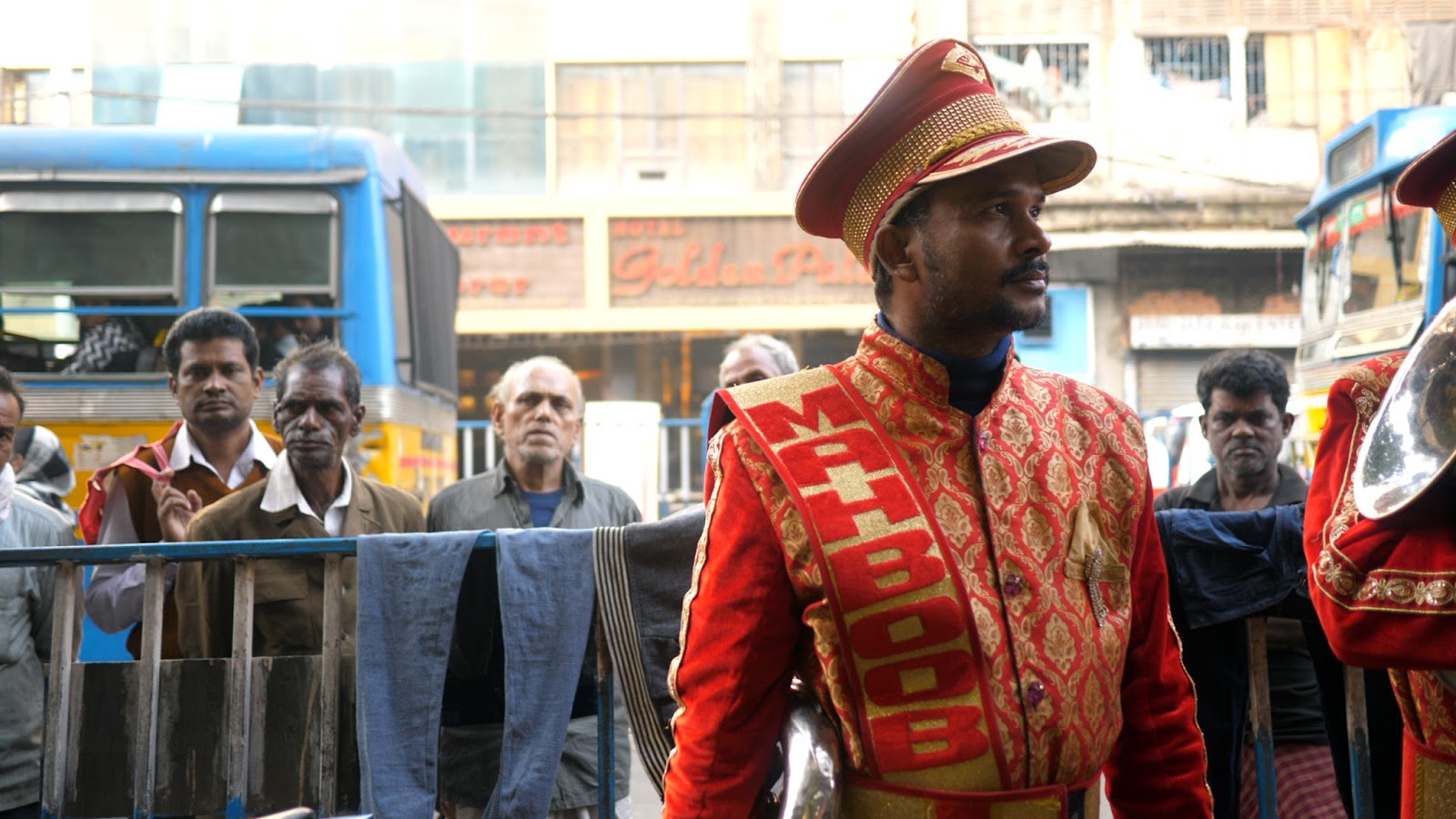
On my recent sojourn in Kolkata I came across a style of music called Shehnai. Shehnai groups are brass bands that play wedding music across India, their origins are colonial, from the mid 19th century. When the British formed brass bands to express their military splendour (impressing upon the locals the might of British imperialism) the locals formed their own bands for their own purposes--filling the skeleton of the colonial construct with the meat of their own local music.


Shehnai, as well as being the name of the music, is also the name of the oboe like reed instrument that forms the backbone of the groups. Here are some images of "Sagar," the band I recorded.  They have their HQ in some of the more congested and warrenous dens near College St. Kolkata. Heres a quick listen to how Sagar sound (its a basic audio recording straight from the camera)...


The band's garb pay more than a passing resemblance to Sgt. Peppers era Beatles, though methinks this is due more to the British military origins of the groups than any particular Indian appropriation of the Beatles. Until the advent of d.j.'s Shehnai bands were the go to music for any wedding celebration. Their popularity in recent years has been waning. The leader of Sagar, Mr Iqbal, when asked about if he was worried whether their type of music would continue replied "we have no reason to worry, when the world is over, the music is over."


Tuesday, August 8, 2017

Fear, Greed and Wonder on the Captain's Trail


If, according to Ryszard Kapuscinski, "the meaning of life is crossing borders" certain lessons were learned on the Captain's latest sojourn in the Americas. What exactly those nuggets of wisdom were, I still haven't figured out, but for sure it was an enlightening and engaging experience. From giving a speech in Spanish to three hundred Cubans, to attending a protest comprising of ten people outside Trump Towers, the journey was thought provoking to say the least. Like Dynamite Johnny's own voyage to Cuba, my travels were subsumed by larger events! While in N.Y. I was told by one enlightened individual "what Cuba needs is greed." Alas, I can't pin this statement to my own mast. But it seems this is what the U.S. wants, it is determined to infiltrate the regime in Cuba, and pin its own peculiar brand of freedom to the island. It has, as A Captain Unafraid interviewee Louis Perez says a long seated "obsessive compulsive disorder" when it comes to Cuba. And Cuba isn't the only country that the U.S. has attempted to extend its ethos, or failing that, control over. While giving an interview at NYU'S Gluckman's house at Washington Square Park I was given some interesting reading by my host Miriam Nyham. The book (which she edited) "America and the 1916 Rising" has a section that deals with the parallels between Cuba and Ireland and their fights for independence. Many commentators and politicians at the time referenced the Cuban revolution against Spain when speaking of possible U.S. support for Irish Independence, with some hoping for outright military intervention by the U.S. in Ireland "the time may come when the American government may find in Ireland as effective a means for intervention as she had found in Cuba." While this never happened, U.S. culture in all its varied qualities has certainly subsumed the island of Ireland these past 100 years. It has left a thick blanket of fog over the country, leaving us digging for nuggets of our own truth amongst the chaff. 


A Captain Unafraid still

Trump Towers

Speaking of the Irish presence in Cuba, I was put up by the Irish Embassy in "Hotel Palacio O' Farill" for the duration of the film festival. The "Palacio"
 is indeed palatial, O Farill is one of the old surnames of Havana, unfortunately, their palatial grandeur was achieved on the back of money from the slave trade. Strangely, the floor I was on was named Longford-both the O' Farill and "Dynamite" O' Brien's came from that county! The foremost expert on the Irish in Havana has to be Señor Rafael Fernandez Moya, a walking library on all matters to do with the Irish presence in that city. Here we are in Havana's "Biblioteca Pública Rubén Martinez" with a portrait of Juan Antonia Mella McPartland (founder of the Cuban Communist Party) between us. Mella's mother was from Ireland.


Señor Moya y yo, Biblioteca Pública Rubén Martinez

Another one of the many minds of information I met told me how Mella was involved in the first attempt to establish a socialist republic in Cuba. I've forgotten the name of the person I conversed with, but he wrote a screenplay with a title hard to forget-"The Red Rooster Sang and Dawn Didn't Rise."

In Old Havana there was an exhibition at the Rubén Martinez Library for the 100th anniversary of Dynamite Johnny's death. Organised in conjunction with some of the local schools, they screened the Captain there and used copies of the drawings of the animated segments as part of the exhibition. A program was organised for the kids called "Discovering my locality, Old Havana."

One morning in Cienfuegos, around halfway across our traversal of Cuba, we had coffee in the home of a farmer called Santiago O' Bourke.


Santiago O' Bourke, Cienfuegos


Santiago, the town, is on the far east of Cuba and is strongly influenced by its African heritage. One of our screenings was at An African Cultural Centre in the city. John McAuliff of the U.S. based "Fund for Reconciliation and Development" was the man behind taking the Captain to the provinces of Cuba.


Myself and John McAuliff, African Cultural Centre, Santiago

Santiago's Santa Ifigeniais Cemetery is the burial place of many's a Cuban hero, most famous of those being, José Martí and Fidel Castro. Cuba, like many a nation, venerates heroes of old as examples for the future, but in Cuba you get the feeling of the closeness of history much more so than in other countries. There is a changing of the guard every half hour at José Martí's grave, it is like he died a few months ago, or did he die atall! As he said himself los que no creen en la imortalidad creen en la historia, "those who don' believe in immortality, believe in history." When I first read this quote I didn't rightly understand it, but by the end of my trip its significance was blindingly clear-the past is the immensity that makes us, it cannot be escaped, and consequently it should be listened to and reflected upon. There José Martí remains in a palatial tomb next to Fidel, around the corner from Thomas Estrada Palma who named Johnny chief Havana Harbor pilot.


José Martí's tomb
I arrived home from my flight to the Americas just in time to gaze in wonder at the reams of U.S. flags unfurled for the 4th of July celebrations in Killarney. 


Talking to other Killarney natives, many were not happy with this exultation of U.S. nationalism in their town, in whispered tones they disagree, but are afraid to speak up. It looks like the 4th of July festival in Killarney is here to stay, though it began just two years ago, methinks it will be set in stone for a long time to come. Even now, it has the feeling that it has always been there. In the same way no-one believed Donald Trump could become president, or that Brexit would ever happen, we now accept these new worlds and deal with their consequences pragmatically. We forget a time they didn't exist. The trick here is to be very careful what we wish for. It has to be said, Killarney's Fourth Of July festival is a crass celebration of U.S. nationalism that is dangerous and blatant balderdash. Given how much war and power mongering the U.S. is and has been involved in, for a prominent town in a neutral country to be raising the U.S. flag alone over its town hall to the sound of the star spangled banner, is ominous as well as being offensive. And I love many, many things about the U.S., but following them down a rabbit hole in my own country to some sad exultation of imperialism, consumerism and trash culture is not something I can support. I was reminded, upon my own recent return to my native land, of the poem by Bonifacio Byrne called Mi Bandera or "My Flag." Byrne came back to Cuba from the U.S. in 1898 and saw to his dismay the U.S. flag flying next to his own. He composed these verses inspired by that ominous vision. 

Upon returning from a distant shore,
Weary of heart and somber,
I searched for my flag anxiously
And saw another flying beside her.

This morning I looked for my flag,
The most beautiful flag in the world;
From the ship's deck, I surveyed the skies
And have never seen anything sadder.

With the faith of an austere soul,
In this conviction I have grown
That two flags should not be flown
When one is enough: my own!

In fields that have been turned to boneyards,
She saw the struggles of the brave,
And she has been the winding-sheet
Of warriors who lie in the grave.

She proudly held her own in battle,
Without puerile or romantic praise:
The Cuban who doesn't believe in her
Should be branded a coward always!

From the depths of the darkest prison,
She heard not a word of woe;
In other lands she was the beacon
That led our footsteps in the snow...

Don't you see her? My flag is the one
That never has mercenary flown,
In whose field there shines a star
All more brightly for being alone!

I've brought her in my soul from exile
Amongst my memories of home,
And I have rendered her homage
By raising her aloft in my poem.

Though listless now and sadly drooping,
I hope some day the sun's pure light
Will shine on her — on her alone! —
On land and sea and mountain height.

If my flag were torn to pieces
Those who died to make her free
Would raise their arms together
And fight eternally!

Friday, May 12, 2017

Marine Mambí (Johnny Dynamite)

The world premiere of A Captain Unafraid is going to be in Havana at an E.U. run "European Film Festival." The festival runs from the 1st to the 11th of June and I'll be in situ to mark the occasion. Here's the music video of the song that started the whole thing in motion! Coincidentally, it's the one hundred anniversary of Dynamite Johnny O' Brien's death on June 20th. I'll be in N.Y. then, more on that later.

Saturday, March 25, 2017

John Hunter and Charles Byrne, A Clash Of Giants

Rebuilding the Royal College of Surgeons, London, 1834

Years ago I read a book called "The Giant, O' Brien" the book called out to me for numerous reasons, foremost of which being, the protagonist and myself shared a name-Charles O' Brien. The book was written by Hillary Mantel and is a great, if harrowing tale of the clash of Irish and English cultures in Britain.

Once Charles came of age, having heard of other giants who had made their fortune in London, he contrived to leave Ireland. O' Brien exhibited himself as a "freak" in England and changed his name from Charles Byrne to Charles O' Brien (claiming descent from warrior king, Brian Boru, founder of the O' Brien clan).  Charles Byrne was an "Irish Giant" born in rural county Derry in 1761. It seems there were numerous giants in his district, turns out they were suffering from a congenital disease called giantism.

John Hunter is known as "the founder of scientific surgery." He was a giant in his own field and was certainly one of the most famed and knowledgeable surgeons of his day. Hunter tried to itemise a whole world of anatomy, diseases and disorders, placing his discoveries in marked jars and vials. Though much of it was destroyed in WWII, the remains of Hunter's collection can still be seen today in the Hunterian Museum in the Royal College of Surgeons, London. He added greatly to our understanding of surgical practice and dissection and detailing of physical disorders. Hunter even gave his own body over to research once he died, and was dissected "for the cause" once he passed away in 1793. His zealousness for science, unfortunately, did not take into account the wishes of others, and when he caught wind of the Giant O' Brien he was determined to not led this specimen get away from him. 

O' Brien, at first, got on well in London. He exhibiting himself in a Cane shop next to "Cox's Museum" (along with a Polish dwarf, Count Borulwaski) and was the talk and toast of London. One day while drinking in his local pub "The Black Horse" he was pick pocketed, unfortunately for Charles, he carried with him that day, in bank notes, all the small fortune he had made. Thus began a spiral of drinking, melancholia and sickness which led to his death.

Knowing O' Brien was sick, the surgeon, Hunter, employed a man called Hewison to follow him around, waiting for the giant to pop his clogs. Another colleague of Hunter's who met O' Brien at this time thought him "an ill-bred beast, though young." They paid no heed to the wants of this "ill-bred" man. O' Brien knew he was being followed and at twenty two years of age paid for his funeral arrangements, his express wishes being, that when he died, he would be buried at sea in a lead coffin, at the mouth of the thames-far from the Royal College of Surgeons. When O' Brien died a few short months later, his will was initiated, the coffin bought, the last journey begun. One of the undertakers though, was paid a sum of 500 pounds to snatch the giant's body and Charles was brought into the arms of John Hunter who rapidly dissected him, eventually putting his bones on permanent display.

The Dissecting Room, Watercolour by Thomas Rowlandson (1756-1827)
A few days before a recent trip to London I saw and signed an online petition to have Charles Byrne's bones buried at sea, it brought back memories of the book by Hillary Mantel I had read, so, while in London I decided to visit the Hunterian Museum at the Royal College Of Surgeons. O' Brien's bones still have pride of place among the vials of dissected humanity and animal life. Just around the corner from O' Brien is an 18th century painting of Owen Farrell an Irish Dwarf.

Charles Byrne's Bones

Hillary Mantel portrays the clash of cultures of Ireland and England as "belief wrestling with knowledge and science wrestling with song" there is indeed some truth in this, but as well as that, the English over the centuries seem to want the Irish to be this superstitious, maybe innocuous other-a fantasy of "illborn brutes." We need to remember the Irish in the era of Charles Byrne were striving to be modern on their own terms, literally dying to break free of the grasp of the old world monarchy and into the arms of a new republic through the 1798 rebellion. What the English thought "a wayward child's dream," would be curtailed, we Irish would be moved into the modern world in the 19th century in a way deemed fit by Britain, not by methods of our own choosing. All of this superstition, republicanism and royalty's significance is perhaps diluted in recent times, but still, the Royal College of Surgeons hosts Charles Byrne's bones and a little painting of "An Irish Dwarf."

All of the images in this post are from a leaflet and postcards I got in the Hunterian Museum, © 2007 Hunterian Museum at the Royal College of Surgeons. Photography was prohibited in the museum. 

Saturday, September 3, 2016

Angling The Stars

On one of many sojourns in Spain I was 6 months in the mountains of Granada. One night, waking from a strange dream, I walked onto the balcony which was right by my room. I was carried outside by the full moon's rays. The moonlight bounced brightly off the Sierra Nevada and illuminated the whole scene in a strange glow. For a moment, I was still sleeping, wondering where the sun had gone and what planet was I on, why was it so bright? What were all those strange jewels in the sky? "It must be morning, why does the day look so odd yet ethereal?" "how can a night be so bright and beautiful?"


Contemporary engraving of 'The Alhambra' from the time of Washington Irving (from the book 'Tales Of The Alhambra')

I'm currently reading Washington Irvine's book "Tales of The Alhambra." It has put me drifting off on my own moonlit (some bright, some gloomy) memories. Irvine's tome is a diary of sorts from his time in the Alhambra of Granada in Andalusia, Spain. He lived there for a while in the late 1820's. The book intertwines myth and history like manys a good tale. It also has some very lovely and strange asides, like this one...  

"I have often observed that the more proudly a mansion has been tenanted in the day of its prosperity, the humbler are its inhabitants in the day of its decline and that the palace of the king commonly ends in being the nestling-place of the beggar. Though I am inclined at times to fancy that a gleam of the golden age still lingers around the ragged community. They possess nothing, they do nothing, they care for nothing. Yet, though apparently idle all the week, they are as observant of all holidays and saints' days as the most laborious artisan."

Or taking it further, as we say in Irish "níl huasal na íseal ach thuas seal is thíos seal," (Life is not a matter of upper class nor lower class, but up for a while and down for a while).

"Sometimes I have issued forth at midnight, when everything was quiet, and have wandered over the whole building. Who can do justice to a moonlight night in such a climate and in such a place! The temperature of an Andalusian midnight in summer is perfectly ethereal. We seem lifted up into a purer atmosphere; there is a serenity of soul, a buoyancy of spirits, an elasticity of frame that renders mere existence enjoyment."

"Before concluding these remarks, I must mention one of the amusements of the place, which has particularly struck me. I had repeatedly observed a long lean fellow perched on the top of one of the towers, manoeuvring two or three fishing rods, as though he was angling for the stars. I was for some time perplexed by the evolutions of the aerial fisherman and my perplexity increased on observing others employed in the manner on different parts of the battlements and bastions; it was not until I consulted Mateo Jiménez that I solved the mystery. It seems that the pure and airy situation of this fortress has rendered it, like the castle of Macbeth, a prolific breeding place for swallows and martlets who sport about its towers in myriads with the holiday glee of urchins just let loose from school. To entrap these birds in their giddy circling, with hooks baited with flies, is one of the favourite amusements of the ragged sons of the Alhambra, who, with the good for nothing ingenuity of arrant idlers, have thus invented the art of angling in the sky."


engraving of Granada from the book


Wednesday, May 18, 2016

A Whirlwind Spanish Tour

A blast from the past (in the form of musician Paul Gomez) came and transplanted me to the mountains and valleys of Spain. From El Molar to Alcobendas and from Madrid to San Sebastián de los Reyes we marched a merry way-bringing music from Erin's green shore to arid Spanish planes. We ran the gamut of venues: from caves nestled cosily into mountains, to tents on the sides of motorways in the urban sprawl of Madrid.

Live in "The Cave Of The Wolf!" John Meskel, Myself, and Paul Gomez
Bullfighting and a religious procession were also part of the bargain, though thankfully we didn't have to play music at either! España Cañi is a term that is probably translated best as "Folkloric Spain" and that is certainly what was experienced in the course of our travels.


La Taberna Marinera

Bullfighting, El Molar
The bullfighting is something I'm unlikely to forget anytime soon. I was between two minds as to whether I should go at-all, but in the end I gritted my teeth and said "if I've never experienced it I can't really have a proper opinion of it." After attending the saturday afternoon bullfight on the outskirts of El Molar, I can honestly say bullfighting is not for me, and neither do I think it is something that should still be practiced in 21st century Spain. After seeing the fifth bull butchered I'd had enough and we made a quick exit. To see each bull's stomach muscles repeatedly clench after it was pierced by the pica (like any humans would) was a hard sight to behold. I was told the particular bullfight I was witnessing was decidedly amateur-the bullfighters were student matadors, so hadn't the same skill to cleanly kill the bull as those of more experience would have had. Amateur or not, "the bulls" of "bullfighting" are cruelly killed in a strange and slow pageantry. A band play in the middle of it all- the trumpets burst and the drums roll, sounding the poor animal's long death knell.

 La Ermita de Nuestra Señora del Remolino

On the last day of our visit I followed the statue of "The Virgin Of The Whirlwind" as she made a small tour of the environs around the church she calls home. The statue was brought from "La Ermita de Nuestra Señora del Remolino" in procession around the vicinity, before being moved to another location further up in the mountains.  This occurred in May just before the heat of summer, through a lush and still verdant Spanish valley. Lola, whose grandson was one of the pole-bearers, was my guide. In the evening sun we slowly strolled along as the Virgin completed her small tour. The whole community was camped and parked wherever they could find a space. People took the day to relax, eat and drink, some then followed the procession around the valley. Later that evening, Lola recounted some of the history of La Virgin Del Remolino to me again...